
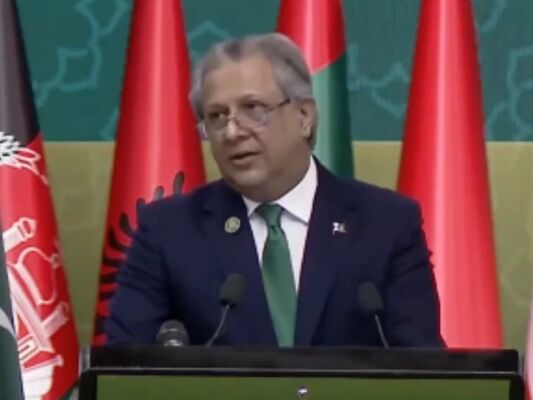
Pakistan’s Law Minister Azam Nazeer Tarar called on member states of the Organisation of Islamic Cooperation (OIC) to expand OIC women digital empowerment by ensuring women and girls have equal access to emerging technologies. Addressing the second day of the 9th OIC Ministerial Conference on Women in Islamabad, he said artificial intelligence should promote inclusion rather than widen existing inequalities.
Tarar said rapid advances in artificial intelligence and digital innovation are reshaping economies, education, healthcare and employment across the world. He stressed that governments must adopt responsible policies to ensure technology creates opportunities for women instead of reinforcing discrimination or limiting their participation in the digital economy.
Describing women’s empowerment as both an economic necessity and a social responsibility, the minister said no nation could achieve its full potential while half of its population faced barriers to education, innovation, employment and leadership. He urged OIC countries to remove obstacles preventing women from contributing fully to national development.
The minister highlighted the historic contributions of Muslim women as scholars, educators, entrepreneurs, jurists and community leaders. He said women continue to excel in science, technology, business, academia, diplomacy and public service, adding that governments should focus on removing barriers rather than defining women’s potential.
Speaking about the role of the OIC, Tarar said the organisation’s Plan of Action for the Advancement of Women and the Women’s Development Organisation provide an effective framework for cooperation among member states. He encouraged countries to exchange best practices and strengthen institutional partnerships while respecting their respective legal systems and cultural values.
Highlighting Pakistan’s domestic efforts, Tarar said women’s empowerment remains a national priority under the Constitution and the government’s reform agenda. He referred to the National Gender Policy Framework 2025 and the Prime Minister’s Women Empowerment Package, which aim to increase women’s leadership, financial inclusion, entrepreneurship, digital access, workplace safety and access to justice.
Concluding his address, Tarar reaffirmed Pakistan’s commitment to using its chairmanship of the conference to strengthen cooperation among OIC countries. He also paid tribute to women affected by conflicts in Palestine, particularly Gaza, as well as Afghanistan and Indian Illegally Occupied Jammu and Kashmir, stressing that OIC women digital empowerment must combine equal opportunity with dignity, justice and protection for future generations.