
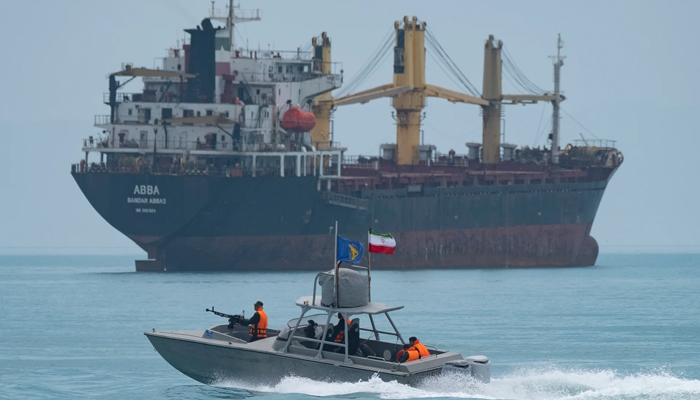
TEHRAN: Iran is implementing a new system to regulate and charge ships passing through the Strait of Hormuz, aiming to maintain control despite the ongoing conflict with the U.S. and Israel.
Before the war, nearly 135 vessels crossed this key waterway daily, but traffic has sharply declined since hostilities began, with only 116 ships passing between March 1 and 25.
According to the Financial Times, most vessels navigating the strait during this period belonged to China, India, and Gulf countries, while some were “dark fleet” ships under Western sanctions. Some of these ships reportedly paid Iran up to $2 million each to secure safe passage, a fee confirmed by Iranian parliamentarian Alaeddin Boroujerdi on state television.
Experts describe the approval process as involving diplomatic negotiations between the ship’s country and Iran, coordinated through embassies.
Once cleared, vessels are issued a code that they broadcast on international emergency radio frequency VHF 16 near Hormuz, while Iranian authorities verify cargo details, crew nationality, and destination.
Data shows none of the cargo transported since the conflict started was destined for the U.S. or Europe. Instead, most shipments were headed to East Asia, with some going to East Africa and South America.
Ships are now using Iranian territorial waters rather than traditional shipping lanes, and some third-country vessels have sailed under Pakistani flags to avoid scrutiny.
The $2 million payment system presents challenges due to Western sanctions on Iran and the Islamic Revolutionary Guard Corps. However, former U.S. Treasury official Clare McClesky said Iran has established covert payment networks. Chinese and Indian companies using the strait declined to comment, while India’s foreign ministry claimed no payments were requested for safe passage.