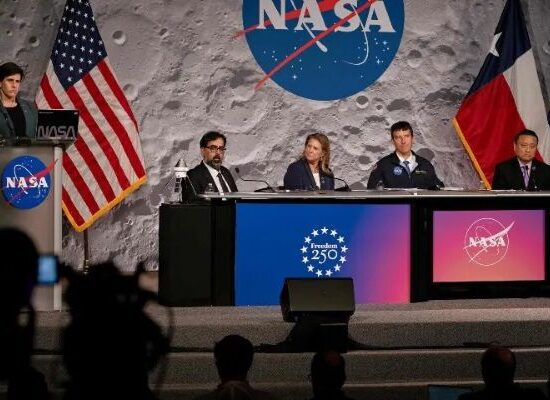

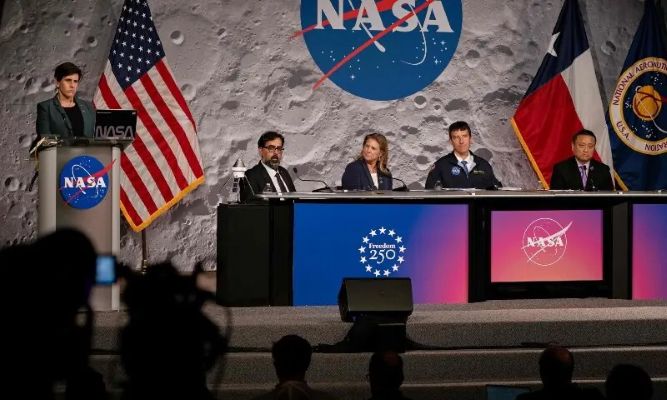
The NASA Moon mission plan has entered a critical new phase following the successful completion of the Artemis II mission. The achievement has strengthened global focus on lunar exploration and future human spaceflight goals.
With Artemis II safely completed, NASA has confirmed that its next step under the NASA Moon mission plan is to prepare for a crewed lunar landing targeted for 2028. The agency is relying heavily on private space companies for this mission.
NASA is working closely with SpaceX and Blue Origin to develop advanced lunar landers. The NASA Moon mission plan now depends on commercial technology to transport astronauts safely from lunar orbit to the Moon’s surface.
Unlike the Apollo program, the modern strategy separates launch systems and landing systems. This NASA Moon mission plan allows larger spacecraft and longer missions, supporting future goals of building a sustainable presence on the Moon.
However, the plan comes with major technical challenges, including in-space refueling and complex docking procedures. Experts say the NASA Moon mission plan requires rapid progress to stay on schedule for the 2028 target.
International competition is also increasing pressure on NASA. With other nations advancing their own lunar programs, the NASA Moon mission plan has become both a scientific and strategic priority for the United States.
NASA officials say backup strategies are in place if delays occur, but they admit the timeline is extremely tight. The success of the NASA Moon mission plan will determine the future of long-term human exploration beyond Earth.