
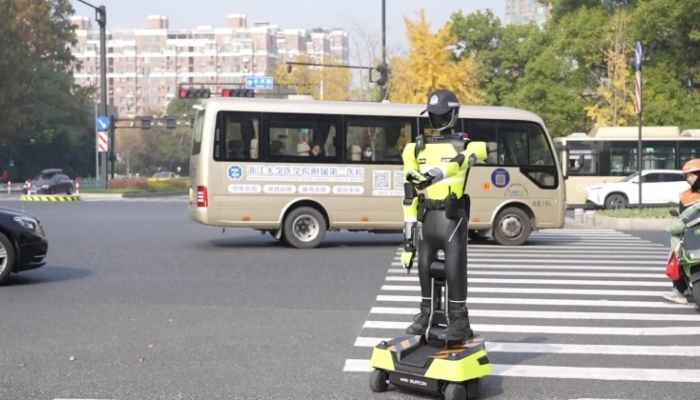
China has taken another step toward integrating advanced technology into public services by deploying smart traffic robots to help manage road traffic and assist citizens. The initiative highlights the country’s growing focus on using artificial intelligence and automation to improve urban mobility and public safety.
According to Chinese media reports, the smart traffic robots have been introduced in Hangzhou, a major city in the eastern Zhejiang Province. The robots are designed to support traffic management efforts while also providing assistance to tourists and local residents navigating busy streets.
Equipped with advanced sensors and intelligent monitoring systems, the robots help ensure compliance with traffic regulations. They can issue reminders to road users, discourage unnecessary horn use, and contribute to maintaining a more orderly traffic environment.
The future of traffic control is here, and they are ROBOTS! 🤖🚓
Meet China’s FIRST robot traffic police squadron! Making their debut at the famous West Lake in Hangzhou, east China, these 15 smart robots direct traffic and guide tourists. Welcome to the sci-fi era! ✨ What do… pic.twitter.com/6CHeyreT40— Shenzhen Channel (@sz_mediagroup) May 4, 2026
One of the unique features of these robotic officers is their ability to interact with the public. During examination periods, the robots can even offer encouraging messages and best wishes to students, adding a human-friendly element to their technological capabilities.
The smart robots are connected to the city’s traffic management network, allowing them to monitor road conditions and identify violations in real time. This integration enables authorities to respond more effectively to traffic-related issues and improve overall road safety.
Reports indicate that the robots can detect common traffic violations, including cyclists crossing stop lines and riders failing to wear helmets. By identifying such offenses, the system helps promote greater awareness of road safety rules and encourages responsible behavior among road users.