
The South Korea Nuclear-Powered Submarine programme has officially moved forward as Seoul announced plans to launch its first nuclear-powered submarine by the mid-2030s. The project is aimed at strengthening the country’s defence capabilities against growing military threats from North Korea.
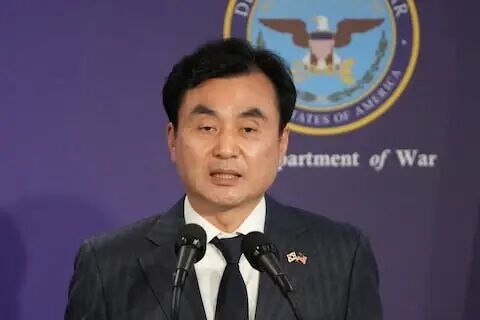
Speaking on Tuesday, Ahn Gyu-back said the new submarine programme is designed to counter North Korea’s expanding submarine-launched missile and nuclear capabilities. South Korean defence officials believe advanced underwater military assets are becoming increasingly important for regional security.
The planned South Korea Nuclear-Powered Submarine would significantly improve the country’s naval strength because nuclear-powered vessels can operate for longer periods without surfacing. Military experts say such submarines offer greater stealth, endurance, and operational flexibility compared to conventional diesel-powered submarines.
Tensions on the Korean Peninsula have remained high in recent years due to North Korea’s continued missile tests and military activities. On Tuesday, South Korea’s military also reported that North Korea launched several missiles, adding to regional security concerns and increasing pressure on Seoul to modernise its defence systems.
Security analysts believe the submarine project reflects South Korea’s broader strategy to strengthen deterrence against potential threats from Pyongyang. The country has already invested heavily in missile defence systems, advanced fighter jets, and naval modernisation programmes in response to North Korea’s growing military capabilities.
The South Korea Nuclear-Powered Submarine initiative may also influence strategic discussions in the Asia-Pacific region. Some experts say neighbouring countries could closely monitor the development due to its potential impact on regional military balance and maritime security dynamics.
Despite the ambitious timeline, South Korean officials say the project will require extensive planning, technological development, and international cooperation. Defence authorities remain focused on enhancing national security while maintaining stability in the region amid rising geopolitical tensions.