
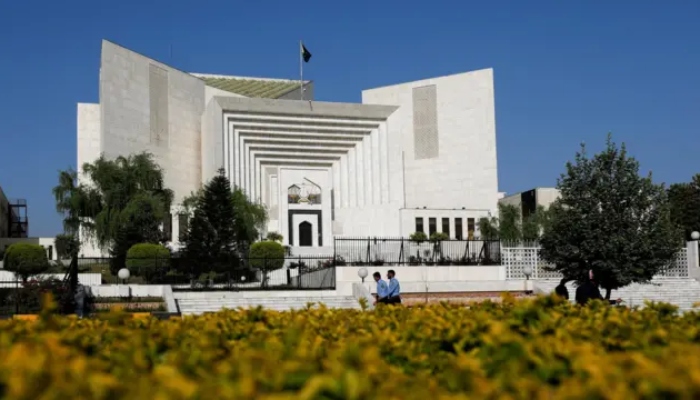
The Supreme Court case backlog has been significantly reduced after Pakistan’s apex court announced that it had cleared an 11-year backlog of death penalty appeals and a 17-year backlog of post-arrest bail cases. The court said the progress reflects the success of reforms aimed at speeding up justice and reducing delays in pending litigation.
According to an official statement issued by the Supreme Court, priority has been given to long-pending cases involving the right to life, personal liberty, family disputes, taxation, tenancy matters, and bail petitions. The court said these reforms have shortened the average time required for deciding cases and improved the overall efficiency of judicial proceedings.
The statement noted that in October 2024 the Supreme Court was hearing death penalty appeals filed in 2015. Since then, the court has decided 608 death sentence appeals, eliminating the 11-year backlog. It added that hearings have now reached cases filed during the current year, with only 22 appeals still pending.
The court also highlighted progress in bail matters. It said a six-year backlog in pre-arrest bail petitions has been cleared after 2,156 applications were decided. Only 23 pre-arrest bail petitions remain pending, allowing the court to focus on more recent filings.
In post-arrest bail cases, the Supreme Court reported that it had eliminated a 17-year backlog by deciding 2,303 petitions. According to the statement, hearings are now being conducted on applications filed during 2026, while only 66 post-arrest bail cases remain pending.
The statement further said the backlog in family cases has also been cleared. A total of 1,065 family cases have been decided, leaving only 150 pending, of which 122 belong to the current year. The court also reported progress in tax and tenancy disputes through continuous case management.
The Supreme Court case backlog reduction was presented as part of broader judicial reforms designed to improve timely access to justice. The court said 506 tax cases have also been decided, while hearings in tenancy disputes have advanced from cases filed in 2011 to those registered in 2026, reflecting sustained improvements in judicial performance.