

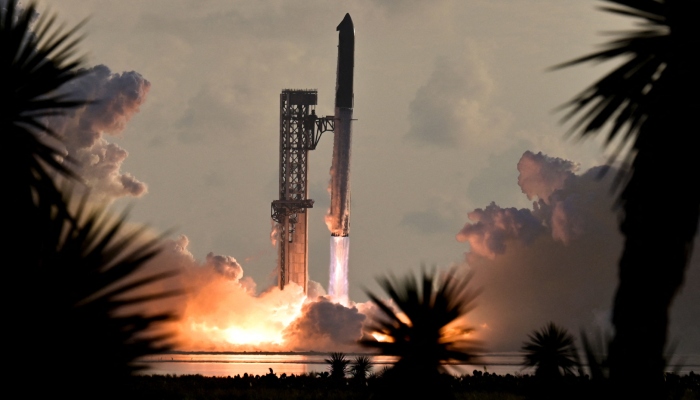
SpaceX’s massive Starship rocket has reached Earth orbit for the first time, marking a significant milestone for Elon Musk’s space company. The achievement came during Starship’s 14th test flight, although an unexpected engine problem forced the mission to end earlier than originally planned.
Starship launched from SpaceX’s Starbase facility in South Texas, near the Gulf of Mexico. The latest flight was designed to test the spacecraft’s ability to reach orbit while also carrying and deploying a new batch of Starlink satellites.
During the flight, one of Starship’s engines experienced a problem. Despite the setback, the spacecraft continued its mission and successfully reached orbit, achieving an objective that previous Starship test flights had not accomplished.
The mission also included the deployment of new Starlink satellites. The successful deployment provided SpaceX with an opportunity to test Starship’s ability to carry and release satellite payloads while operating in orbit.
The flight was originally scheduled to last around 10 hours. However, following the engine issue, SpaceX shortened the mission to approximately three hours. The early conclusion allowed the company to gather important flight data while limiting the impact of the technical problem.
The latest test is an important step in SpaceX’s long-term development of Starship as a reusable spacecraft. The company intends to use the vehicle for large satellite deployments, human spaceflight and future missions beyond Earth orbit.
Starship’s latest flight was the 14th test of the vehicle since its testing programme began in 2023. Although the engine problem prevented the mission from continuing according to its original schedule, reaching orbit and deploying Starlink satellites represented key milestones for the Starship programme.