
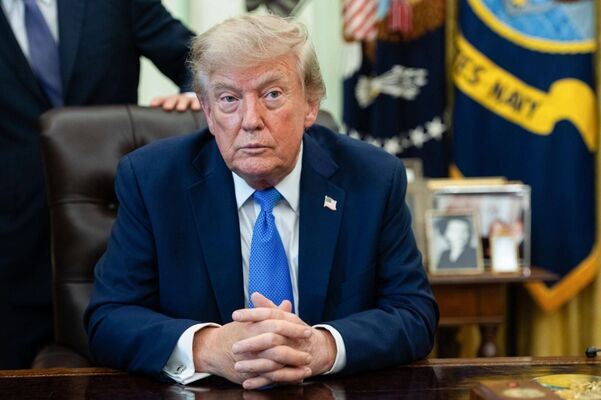
US President Donald Trump has signed two executive orders seeking to restrict US birthright citizenship, renewing his administration’s efforts to change citizenship rules despite a recent Supreme Court ruling. The new measures represent a narrower approach than Trump’s earlier attempt to limit citizenship for children born in the United States.
The orders target what the Trump administration describes as “birth tourism”, in which pregnant foreign nationals travel to the United States to give birth. White House officials said the practice has been banned under the new directives, while the administration argues that the measures address historical exceptions to citizenship at birth.
Trump’s latest action follows a Supreme Court decision on June 30 that rejected his earlier executive order as unconstitutional. That order had sought to deny citizenship to certain children born in the US when neither parent was an American citizen or legal permanent resident.
The new directives also seek to limit citizenship rights for some children born to foreign government employees in the United States and children of people classified as alien enemies. The measures could face further legal challenges, with immigration advocates arguing that the president is attempting to bypass the Supreme Court’s decision.
The debate centres on the 14th Amendment to the US Constitution, which has traditionally been interpreted as guaranteeing citizenship to people born in the United States, with limited historical exceptions. Those exceptions include children of foreign diplomats and members of an enemy occupying force.
Trump has criticised the Supreme Court’s 6-3 ruling, calling it an unfortunate decision and arguing that businesses have developed around birth tourism. He has repeatedly made immigration restrictions a major priority of his administration.
Legal experts have questioned how far the new US birthright citizenship orders can go following the Supreme Court ruling. Civil rights and immigrant advocacy groups have predicted that the measures will face court challenges, while the administration maintains that the new directives fall outside the scope of the earlier ruling.