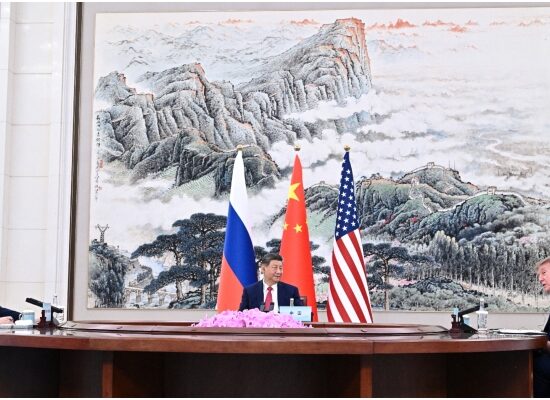


APEC leaders have called for stronger regional connectivity and fewer trade barriers to promote trade, investment and economic growth across the Asia-Pacific region. The appeal came after a two-day summit in China’s Shenzhen, where leaders discussed ways to strengthen economic cooperation. China hosted the 33rd APEC Economic Leaders’ Meeting under the theme of building an Asia-Pacific community that prospers together. Statements released on Friday outlined the group’s priorities for regional development.
According to the APEC Connectivity Blueprint released by China’s Foreign Ministry, member economies should strengthen economic links through existing cooperation mechanisms. The document highlighted the importance of connectivity in supporting the movement of goods, services, capital and people. It also stated that improved regional links could encourage closer economic relations and support sustainable growth across the Asia-Pacific region.
The blueprint reaffirmed the forum’s commitment to the APEC Putrajaya Vision 2040, which provides a long-term framework for regional economic cooperation. It also called for reducing institutional barriers that restrict trade and investment. These measures aim to create a more connected regional economy and improve opportunities for businesses operating across member economies.
Transport development also featured prominently in the discussions. APEC leaders stressed the need to strengthen land, maritime and air transport networks. They highlighted safe and efficient transport operations to facilitate the movement of passengers and goods. The blueprint also encouraged innovation and digital transformation in transport systems, including the exploration of secure autonomous and unmanned technologies.
In a separate document titled the 2026 APEC Leaders’ Shenzhen Outlook, participating economies acknowledged growing economic opportunities alongside increasingly complex global challenges. They emphasised the importance of technological progress in improving regional productivity, economic resilience and growth. The statement also highlighted cooperation to maintain macroeconomic stability and create broader economic opportunities for people across the region.
The leaders reaffirmed APEC’s position as the region’s main platform for economic cooperation. They also pledged to make the organisation a more modern, efficient and effective forum for developing new ideas. Its voluntary, non-binding and consensus-based principles will continue to guide cooperation among member economies.
Established in 1989, APEC comprises 21 member economies, including China, the United States, Russia, Japan, Australia and South Korea. The forum represents more than 60% of global gross domestic product and around 40% of the world’s population. The latest summit highlighted the importance of regional connectivity, technological innovation and reduced trade barriers in supporting future economic development.