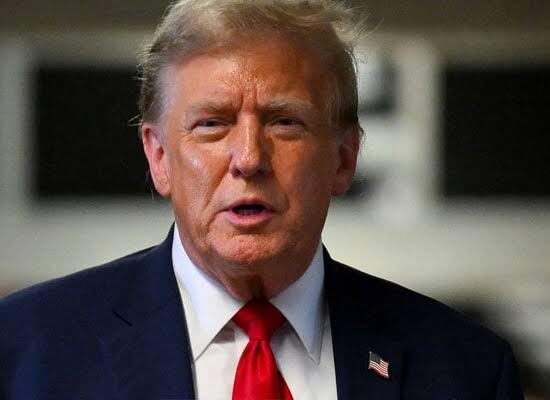


United States President Donald Trump has announced that Washington will not ask Russia or China for assistance in resolving the ongoing Iran conflict. Speaking to American media, Trump clarified that while diplomatic channels remain active among major global powers, the United States intends to handle its approach toward Tehran independently without relying on mediation from Moscow or Beijing.
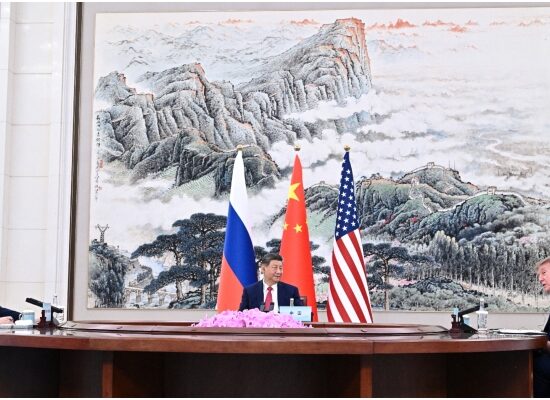
During the interview, President Trump highlighted recent diplomatic engagements with Chinese leadership, describing Chinese President Xi Jinping’s warm welcome as a positive sign for broader international cooperation. He noted that this constructive atmosphere points toward the success of a trilateral meeting involving the United States, China, and Russia.
Despite this diplomatic momentum, Trump drew a clear boundary regarding Middle Eastern security issues. He emphasized that the Iran conflict requires a firm and direct American strategy rather than multilateral intervention from rival superpowers whose regional interests often differ from Washington’s objectives.
Instead of focusing on Tehran, Trump explained that the primary agenda for the upcoming trilateral summit will be nuclear arms control. Global leaders are expected to discuss limiting strategic weapons, reducing nuclear stockpiles, and preventing a new arms race among the world’s largest military powers.
Political analysts suggest that keeping the Iran conflict separate from nuclear arms negotiations allows the White House to maintain leverage in both areas. By isolating arms control talks, Washington can pursue critical global security agreements with Moscow and Beijing without making concessions on Middle East policy.
Observers also note that President Xi Jinping’s hospitality signals a willingness from Beijing to keep high-level dialogue open despite ongoing trade and geopolitical tensions. However, Trump’s firm stance shows that improved diplomatic optics will not alter America’s independent posture toward Iran.
As preparations continue for the high-stakes trilateral discussions, international attention remains divided between global nuclear stability and regional tensions. Ultimately, Trump’s remarks underscore that ending the Iran conflict remains an issue the United States refuses to outsource to Russia or China.