
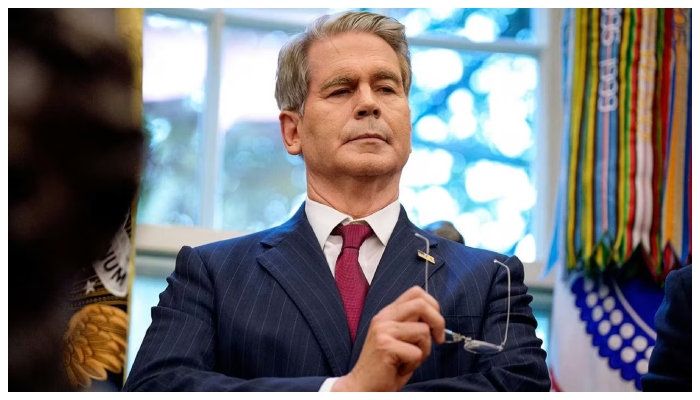
Currency swap agreement discussions have gained attention after US Treasury Secretary Scott Bessent claimed that several Gulf allies have formally requested access to currency swap facilities for financial stability.
Speaking during a US Senate hearing, Scott Bessent stated that countries seeking the currency swap agreement include key regional partners such as the United Arab Emirates. His remarks highlighted growing financial coordination between the United States and Gulf economies.
The currency swap agreement is a financial arrangement in which the United States provides temporary dollar liquidity to partner countries. In return, the US receives the local currency, helping stabilize short-term financial pressures.
According to the Treasury Secretary, one of the key objectives of the currency swap agreement is to prevent sudden and disorderly asset sell-offs by allied nations in global markets, which could otherwise disrupt financial stability.
Bessent emphasized that the mechanism plays an important role in maintaining confidence in international financial systems, especially during periods of economic uncertainty or currency volatility.
The currency swap agreement is often used as a liquidity support tool, ensuring that partner countries can manage dollar shortages without destabilizing their economies or foreign exchange reserves.
While discussions continue, the proposal reflects increasing demand among Gulf economies for stronger financial safety nets and closer coordination with the US in global monetary systems.