
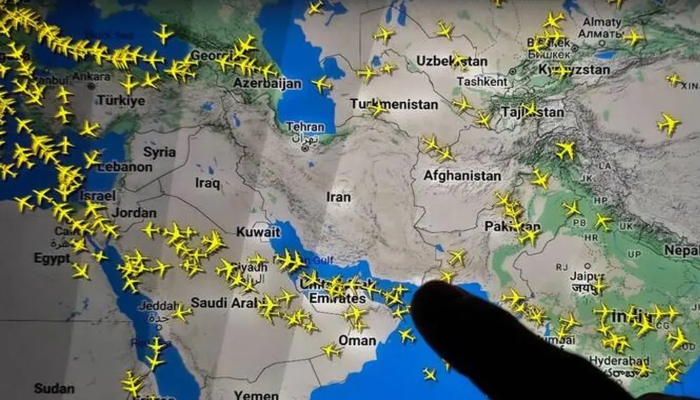
Rising tensions between Iran and Israel have prompted Iraq and Syria to close their airspace, leading to widespread disruptions in regional air traffic. The move comes after recent military exchanges between the two countries heightened security concerns across the Middle East.
Following the latest attacks and counterattacks between Iran and Israel, both Iraq and Syria announced restrictions on civilian aviation activities. The closures have affected arriving, departing, and overflying commercial aircraft, forcing airlines to adjust flight routes and schedules.
According to a Notice to Air Missions (NOTAM), Iraq has closed its airspace for 72 hours. The restriction applies to all commercial flights operating to, from, or through Iraqi airspace. The NOTAM became effective on June 7, 2026, and is expected to remain in force for three days unless extended.
In addition, Syrian authorities have imposed restrictions on overflights and commercial aviation operations within the country’s airspace. The decision was reportedly taken following warnings from international aviation authorities regarding the potential risks posed by the ongoing regional conflict.
Operations at Baghdad and Damascus airports have also been significantly affected. Reports indicate that arrivals and departures at both airports were suspended after 10:00 PM, disrupting travel plans for thousands of passengers.
Officials say the closures are precautionary measures aimed at ensuring the safety of civilian aircraft amid heightened military activity in the region. Airlines are closely monitoring developments and may continue rerouting flights to avoid affected areas.
The airspace shutdown highlights the broader impact of the Iran-Israel confrontation on regional transportation and aviation networks. Aviation experts warn that prolonged restrictions could result in increased flight times, operational costs, and travel disruptions across the Middle East.
As diplomatic and military developments continue to unfold, regional authorities and airlines remain on high alert, closely assessing the security situation before resuming normal air traffic operations.