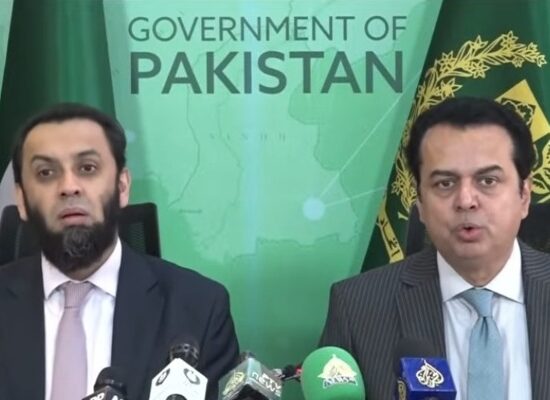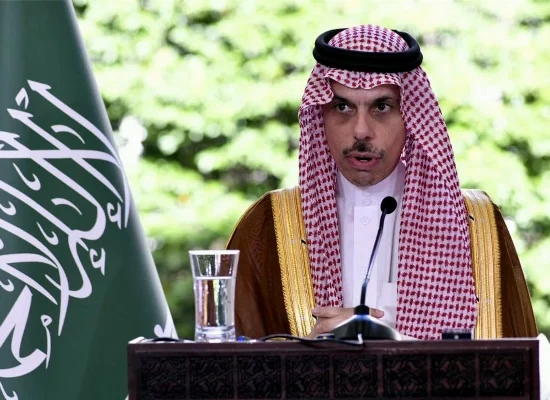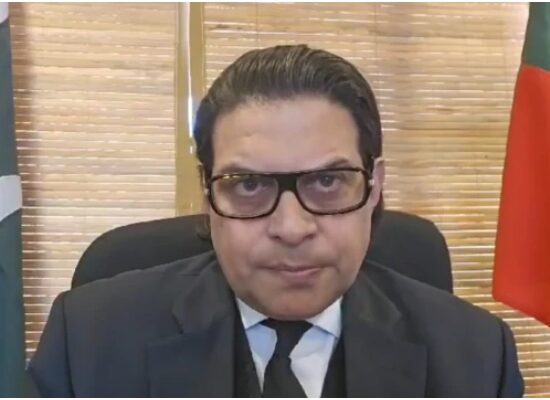

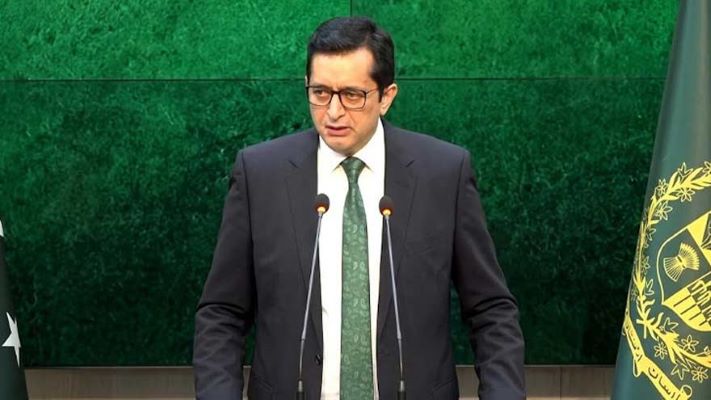
Pakistan has reaffirmed its support for Saudi sovereignty, saying there would be no compromise on the sanctity of the Holy Mosques or Saudi Arabia’s territorial integrity. Foreign Office spokesperson Sajjad Haider Khan made the remarks during the weekly media briefing in Islamabad on Thursday.
The spokesperson strongly condemned the reported attempt to target Makkah and described it as a deeply concerning act. He said the incident had hurt the religious sentiments of millions of Muslims around the world. Pakistan, he added, stood alongside Saudi Arabia in protecting its sovereignty, peace and territorial integrity.
Khan also condemned ongoing Houthi attacks targeting Saudi civilian areas and installations. He said Pakistan was closely monitoring the worsening situation in the Middle East. Islamabad continued to support diplomacy and peaceful dialogue as a means of addressing regional conflicts and promoting lasting peace.
The briefing also covered recent developments in Pakistan-India relations. Khan said an Indian naval vessel made what he described as an aggressive manoeuvre near a Pakistan Navy ship inside Pakistan’s Exclusive Economic Zone on September 15. He termed the incident a serious violation of international law and a bilateral agreement.
According to the spokesperson, Pakistan summoned India’s Chargé d’Affaires to the Foreign Office on Wednesday night and conveyed its protest. He added that Pakistan’s Chargé d’Affaires in New Delhi would also lodge a formal protest with India’s Ministry of External Affairs on Thursday.
Khan further confirmed that Prime Minister Shehbaz Sharif will lead Pakistan’s delegation to the high-level segment of the 81st United Nations General Assembly session in New York next week. The UNGA debate is scheduled from September 22 to 26, with a final sitting on September 28.
The spokesperson said the prime minister will address Pakistan’s priorities, including sustainable development, climate change, counterterrorism, Islamophobia, global economic challenges and UN reforms. He will also raise issues concerning the Global South, Indian-administered Jammu and Kashmir and Palestine, while holding bilateral meetings with world leaders and the UN secretary-general.