
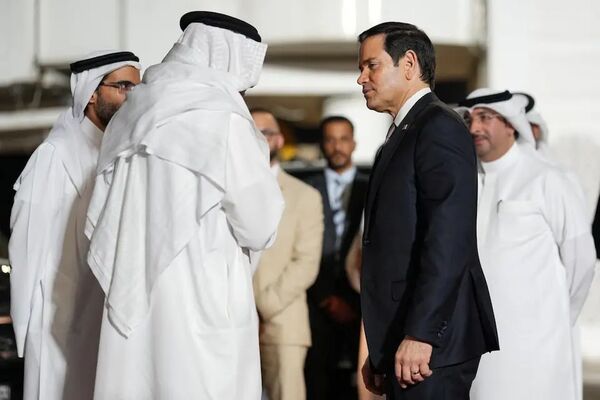
Rubio Iran deal diplomacy entered a critical phase as US Secretary of State Marco Rubio arrived in Bahrain to seek support from Gulf allies for Washington’s proposed agreement with Iran. The visit marks the final stop of his regional tour aimed at easing concerns among key partners about the future impact of the deal.
Rubio’s trip comes shortly after preliminary negotiations between the United States and Iran produced a framework agreement intended to reduce tensions and end recent hostilities. However, several Gulf countries remain cautious, fearing that excessive concessions to Tehran could alter the region’s security balance.
During his visit to Manama, Rubio is expected to meet Bahraini officials and representatives of the Gulf Cooperation Council (GCC). The bloc includes Saudi Arabia, United Arab Emirates, Qatar, Kuwait, Oman, and Bahrain. These countries play a central role in regional security and maintain close strategic ties with Washington.
At previous stops in the UAE and Kuwait, Rubio emphasized that the proposed agreement would not compromise the security interests of America’s regional allies. He sought to reassure Gulf leaders that Washington remains committed to protecting long-standing partnerships despite ongoing diplomatic engagement with Tehran.
Questions continue to surround several aspects of the negotiations. American and Iranian officials have offered differing accounts regarding nuclear inspections, financial arrangements, the future of the Strait of Hormuz, and broader regional security issues. These differences have contributed to uncertainty about the long-term viability of the agreement.
The proposed framework reportedly includes major economic provisions and reconstruction plans for Iran. Critics within the Gulf region worry that expanded economic support could strengthen Tehran’s regional influence and increase its leverage over critical energy and shipping routes.
Rubio Iran deal discussions are expected to focus on building confidence among Gulf partners while preserving regional stability. As negotiations continue, the response of GCC countries will remain important for the future of US strategy in the Middle East and for the success of any lasting agreement with Iran.