
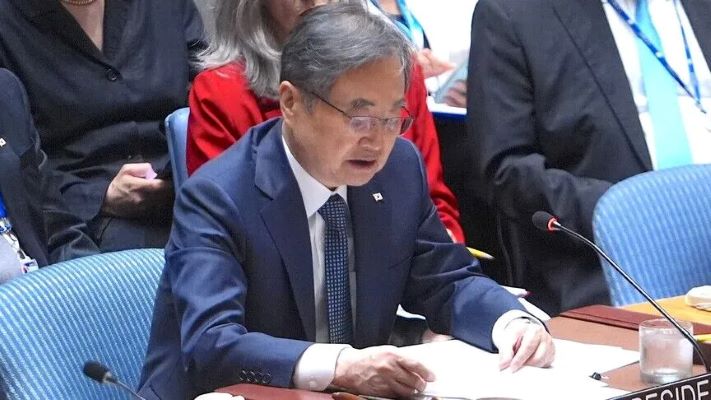
South Korea has told Iran that it has made no decision on a possible military deployment to the Strait of Hormuz. Foreign Minister Cho Hyun shared Seoul’s position during a phone call with his Iranian counterpart Abbas Araghchi on Friday. The discussion came as South Korea faces growing US pressure to support military operations involving Iran.
Cho stressed that South Korea Hormuz deployment plans remain undecided. He also highlighted the need to restore freedom of navigation through the strategic waterway as soon as possible. Seoul has repeatedly maintained that vessels should be allowed to pass safely through the Strait of Hormuz.
The two ministers discussed the movement of vessels through the waterway and the wider situation in the Middle East. Cho expressed deep concern over the escalating regional situation. He also called for sustainable peace and stability across the region.
South Korea also reaffirmed its participation in international efforts to protect freedom of navigation. Seoul has consistently said that the free and safe passage of all vessels must remain guaranteed. However, the government has not announced any decision to send military assets to Hormuz.
The latest conversation followed warnings from Tehran against South Korea joining US military operations against Iran. Seoul has issued several statements in recent days stressing that no final decision has been made. Cho and Araghchi have now spoken six times since the conflict began.
South Korea faces a difficult strategic position because it is a treaty ally of the United States. The country also hosts around 39,000 American troops on the Korean Peninsula, according to the US president. At the same time, Seoul must consider its wider security and diplomatic interests in the region.
Beyond the Strait of Hormuz, South Korea is also facing calls to provide military equipment for Ukraine. Reports said Washington is seeking Seoul’s Patriot-equivalent missile interceptors for Kyiv. For now, however, South Korea Hormuz deployment remains undecided as Seoul weighs regional security concerns and pressure from its allies.