
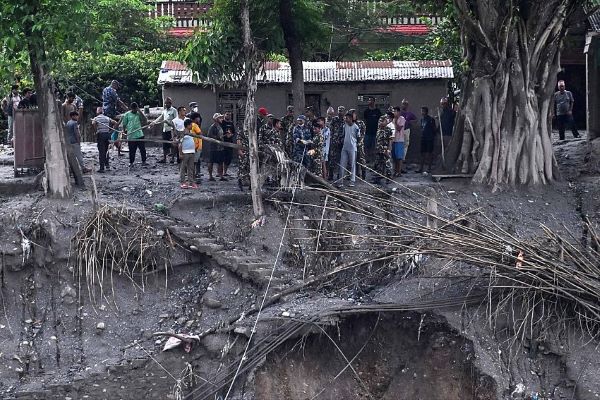
Nepal floods have killed at least 21 people after several days of heavy rain triggered flooding and landslides across the country and the Kathmandu region. Five people remain missing, while another five were injured, according to authorities.
Prime Minister Balendra Shah said the injured were receiving medical treatment as rescue teams continued search and relief operations. The Nepal floods have also disrupted transportation and damaged roads and other infrastructure in several areas.
Authorities warned that the danger had not passed as heavy rain and strong winds continued in parts of Nepal. People living near rivers and in hilly areas were advised to avoid unnecessary travel and remain cautious as weather conditions remained unstable.
Nepal’s National Disaster Risk Reduction and Management Authority said heavy to very heavy rainfall from September 24 to 27 was linked to a low-pressure system over the Bay of Bengal. At least 747 families were directly affected, while around 2,000 people were moved to safer locations because of the risk of floods and landslides.
The severe weather also affected Nepal’s power supply. According to the supplied report, 1,013.2 megawatts of electricity transmission were disrupted after damage to the national grid. Hydropower projects with a combined capacity of 318 megawatts also suspended operations after transmission towers collapsed.
The latest Nepal floods came about a month after major flash floods hit the Bhote Koshi and Trishuli river corridors on August 26. The disaster affected Rasuwa, Nuwakot, Dhading and other downstream areas, causing extensive damage to homes, roads, bridges and hydropower facilities.
The earlier floods also resulted in a large number of deaths and missing people. Nepal’s Foreign Ministry reported on August 29 that 626 bodies had been recovered and around 2,400 people remained unaccounted for as rescue and search operations continued. The latest flooding has renewed concerns over the country’s vulnerability to severe weather.