
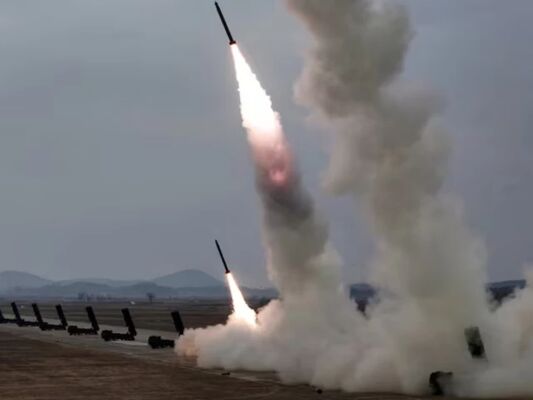
North Korean leader Kim Jong Un has declared that his country will continue to act as a nuclear state, reinforcing its long-standing position amid growing global tensions. According to state media KCNA, the announcement was made during a ruling Workers’ Party Central Committee meeting held over several days.
The statement by Kim Jong Un highlights North Korea’s continued commitment to its nuclear program despite international sanctions. The country remains under strict restrictions imposed by the United Nations and the United States, which prohibit the development of nuclear weapons and ballistic missile systems. However, Pyongyang has consistently rejected these measures.
Kim Jong Un argued that the global security environment has become increasingly unstable and unpredictable. He blamed “hegemonic forces” for escalating conflicts around the world and accused the United States of worsening tensions in regions such as Europe and the Middle East. These claims were reported by KCNA.
Reiterating his stance, Kim said that strengthening nuclear forces and fully exercising North Korea’s position as a nuclear weapons state is the most effective response to current global challenges. The declaration signals that the country has no immediate intention of returning to denuclearisation talks.
The North Korea nuclear state policy, as outlined in the report, also includes plans to expand conventional military capabilities. KCNA noted that Kim has ordered increased development of advanced weapons systems, including the construction of a large strategic guided missile cruiser.
Experts believe the remarks reflect Pyongyang’s continued refusal to engage in disarmament negotiations. Analysts say North Korea now appears more interested in being recognized as a nuclear power rather than abandoning its weapons program, which could shift future diplomacy toward arms control discussions instead of complete denuclearisation.
The announcement comes as North Korea continues to defy decades of international sanctions and strengthens its military capabilities. It also underscores rising concerns among regional powers about escalating tensions on the Korean Peninsula and the broader implications for global security.