
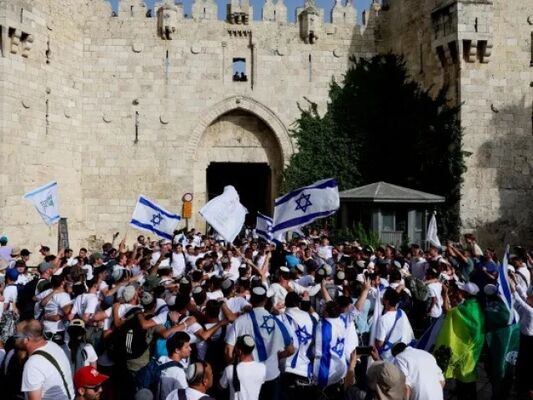
The Al-Aqsa Mosque compound was the focus of renewed tensions on Wednesday after Palestinian authorities said dozens of Israeli settlers entered the holy site in occupied East Jerusalem under the protection of Israeli police. The incident, reported by the Palestinian news agency WAFA, has added to longstanding disputes over one of the world’s most sensitive religious locations.
According to WAFA, citing the Jerusalem Governorate, the group toured the courtyards of the Al-Aqsa Mosque compound and performed Talmudic rituals while Israeli police provided security. Palestinian officials condemned the visit, describing it as part of broader efforts to alter the status of the site.
Al-Aqsa Mosque is regarded by Muslims as Islam’s third-holiest site. Jews refer to the same area as the Temple Mount, which they believe was the location of two ancient Jewish temples. The site’s religious significance has made it a recurring flashpoint in the Israeli-Palestinian conflict.
Palestinian authorities accused Israel of intensifying efforts to strengthen its control over occupied East Jerusalem and changing the identity of the holy site. They reiterated that East Jerusalem should serve as the capital of a future Palestinian state, in line with their interpretation of international resolutions.
Separately, the Israeli newspaper Haaretz recently reported that Israeli police had launched a recruitment campaign targeting religious Jews and activists to serve at the Al-Aqsa Mosque compound. According to the report, the initiative aims to increase staffing as the number of Jewish visitors to the site continues to grow.
The Jerusalem Governorate described the reported recruitment campaign as a “dangerous development,” arguing that it could shift practical authority over the compound away from the Jerusalem Islamic Waqf, the Jordanian-administered body responsible for managing the mosque under existing arrangements.
The developments highlight the continuing sensitivity surrounding the Al-Aqsa Mosque compound, where competing religious, political, and historical claims frequently fuel tensions. The situation remains closely watched by regional and international observers as concerns over stability in Jerusalem persist.