
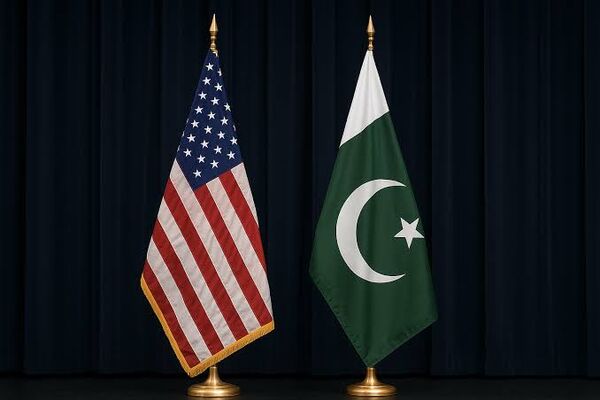
US backs Pakistan’s right to self-defence against terrorist attacks, reaffirming Washington’s support as the United Nations General Assembly debated and adopted the ninth review of the Global Counterterrorism Strategy (GCTS). The statement comes amid continued regional security concerns and renewed international discussions on combating terrorism.
According to the US State Department, Pakistan has endured significant losses due to terrorism over the years. The department stated that the United States recognizes Pakistan’s right to defend itself against terrorist attacks, particularly as security challenges continue along the Pakistan-Afghanistan border. The remarks followed Pakistan’s recent action against alleged terrorist infrastructure after an attack targeting Pakistan Rangers personnel.
The statement also reflects Washington’s consistent position on Pakistan’s counterterrorism efforts. Earlier this year, senior US officials similarly emphasized support for Pakistan’s security while closely monitoring developments in the region. The latest remarks reaffirm continued cooperation on shared counterterrorism objectives.
Statement by Ambassador Asim Iftikhar Ahmad,
Permanent Representative of Pakistan to the UN,
At the UN General Assembly’s 96th Plenary Meeting of the 80th Session Under Agenda Item 118 on the 9th Review of the UN Global Counter Terrorism Strategy (GCTS)*
*****Thank you Mr.… pic.twitter.com/Oynf3wm2KK
— Permanent Mission of Pakistan to the UN (@PakistanUN_NY) July 2, 2026
At the United Nations, member states voted on the ninth review of the Global Counterterrorism Strategy after consensus could not be achieved. The resolution was adopted with 140 votes in favor, including Pakistan, while the United States, Israel, and Argentina voted against it. Japan later clarified that its abstention resulted from a technical error and that it had intended to support the resolution.
The United States argued that the updated strategy had become excessively lengthy and no longer maintained sufficient focus on practical counterterrorism priorities. It also expressed concerns that several key policy issues raised by Washington had not been adequately addressed during negotiations.
Pakistan’s Permanent Representative to the United Nations, Ambassador Asim Iftikhar Ahmad, described terrorism as an evolving global threat that requires stronger international cooperation. He highlighted Pakistan’s long-standing contribution to global counterterrorism efforts while noting the heavy human and economic costs the country has endured due to terrorism.
US backs Pakistan’s right to self-defence as Pakistan continues to advocate for a comprehensive global approach against terrorism. Islamabad has also called for reforms in international counterterrorism mechanisms, stronger action against online radicalization, and greater transparency in global sanctions and financial monitoring systems.