
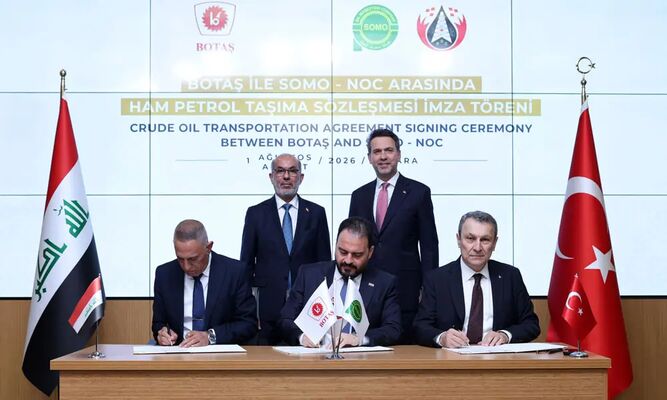
Türkiye and Iraq have signed a one-year agreement to maintain the operation of a key crude oil pipeline between the two countries. The Türkiye Iraq oil pipeline deal ensures continued use of the Iraq-Türkiye Pipeline (ITP), which connects Iraqi oil supplies to Türkiye’s Ceyhan port.
Turkish Energy Minister Alparslan Bayraktar announced the agreement on Saturday, saying it extends a long-running arrangement that expired earlier in the week. The deal allows Baghdad’s only functioning crude oil export pipeline to remain operational while both sides discuss a broader long-term agreement.
According to the minister, the new transit arrangement covers a daily capacity of up to 750,000 barrels. The agreement was signed between Türkiye’s state energy company BOTAS and Iraq’s state oil firms SOMO and NOC following discussions between officials in Ankara.
The Iraq-Türkiye Pipeline has a total capacity of around 1.5 million barrels per day. Türkiye has expressed interest in increasing the pipeline’s usage and potentially expanding its connection to oil fields in southern Iraq.
Irak Petrol Bakanı Sayın Basim Muhammed Hüdeyir ve beraberindeki heyet ile Bakanlığımızda verimli bir görüşme gerçekleştirdik.
Görüşmemizin ardından, BOTAŞ ile Irak devlet petrol şirketleri SOMO ve NOC arasında Irak–Türkiye Ham Petrol Boru Hattı’nın etkin kullanımını sağlayacak… pic.twitter.com/aYk8rbo5Da
— Alparslan Bayraktar (@aBayraktar1) August 1, 2026
Currently, the pipeline transporting crude oil to the Turkish port of Ceyhan carries around 170,000 barrels per day, according to Turkish data. The route remains an important energy corridor for Iraq’s oil exports and regional energy trade.
Officials from both countries described the talks as productive and said the one-year extension provides additional time to negotiate a more comprehensive and long-term framework. Energy cooperation between Türkiye and Iraq has remained a key area of bilateral relations.
The Türkiye Iraq oil pipeline deal is expected to support continued oil transportation while negotiations continue on future arrangements. Both countries are looking to maximize the economic potential of the pipeline and strengthen energy cooperation in the region.