
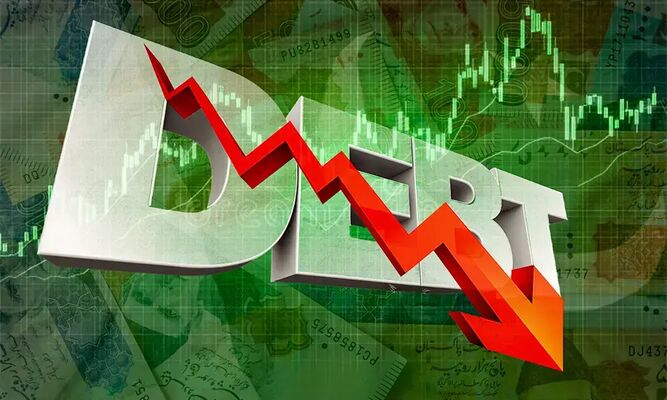
Pakistan public debt FY26 recorded its slowest growth in 15 years, according to Finance Adviser Khurram Schehzad, who said the pace of central government debt expansion has declined to just 5% during the current fiscal year. The figures, based on data from the State Bank of Pakistan (SBP), were presented as evidence of improving debt sustainability and stronger fiscal management.
Responding to discussions on social media, Schehzad said sovereign debt should not be judged by absolute figures alone. He explained that international financial institutions assess debt primarily through sustainability indicators rather than headline debt amounts. According to him, Pakistan’s central government debt currently stands at Rs81.9 trillion.
The finance adviser clarified that the widely circulated estimate of Rs97 trillion to Rs100 trillion includes total debt and liabilities, incorporating obligations beyond central government debt, including certain private sector liabilities. He stressed that debt-to-GDP is the globally accepted benchmark for evaluating a country’s debt position.
According to the latest figures, Pakistan’s debt-to-GDP ratio has declined from around 76% in FY2019-20 and approximately 75% during FY2022-23 to nearly 68% in FY26. Officials say the decline reflects improved fiscal discipline and better debt management policies implemented over recent years.
Schehzad also highlighted a significant improvement in Pakistan’s external debt profile. External debt-to-GDP has fallen from around 28% in previous years to nearly 21% in FY26, reducing repayment pressures and strengthening the country’s financial resilience against external risks.
Another positive development is the extension of the average maturity of domestic debt from 2.8 years to 3.8 years. This reduces refinancing risks by allowing the government more time to manage repayments. In addition, Pakistan retired Rs4.7 trillion in debt, which the adviser described as a first in the country’s financial history.
Pakistan public debt FY26 remains under close observation, but officials argue that the focus should be on sustainability rather than the total size of borrowing. The finance adviser maintained that borrowing, repayment, and refinancing are standard government practices, adding that Pakistan’s debt has become more affordable, sustainable, and less exposed to financial risks.