

A significant disparity in government salaries has come to light as employees working in more than 50 federal institutions are reportedly receiving additional allowances that exceed 100 percent of their basic salaries. The revelation has renewed debate over pay inequality within Pakistan’s federal bureaucracy.
According to official sources, several government departments and autonomous institutions provide special incentives and allowances that substantially increase employees’ total earnings. In some cases, officials holding the same grade receive salaries that are two to three times higher than their counterparts in regular government ministries.
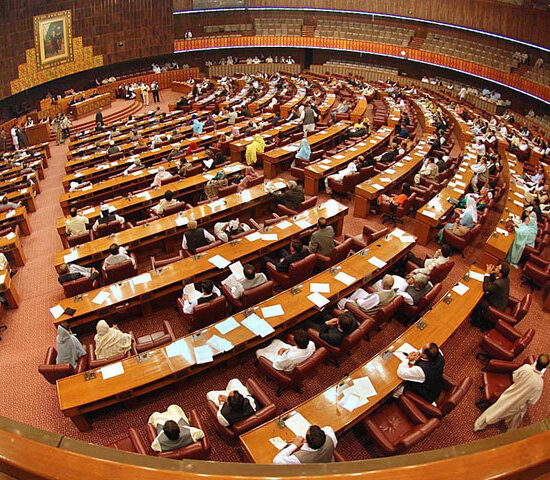
Institutions benefiting from these enhanced compensation packages reportedly include the President’s Secretariat, Prime Minister’s Office, National Assembly Secretariat, Senate Secretariat, higher courts, accountability bodies, intelligence agencies, tax authorities, and various tribunals and specialized courts.
Beyond constitutional offices and enforcement agencies, a number of educational, rehabilitation, healthcare, policing, and autonomous organizations also offer additional benefits to their employees. These incentives have been introduced over the years to address operational requirements, reward performance, and retain skilled professionals.
However, the expansion of special allowances has led to the emergence of multiple salary structures within the same government framework. As a result, a Grade-20 officer working in a standard ministry may earn significantly less than an officer of the same grade serving in an institution that offers special allowances.
Critics argue that the growing gap undermines the principle of a uniform pay system in the civil service. Some bureaucrats have described the situation as the creation of a “government within a government,” where certain institutions enjoy privileged compensation packages unavailable to the majority of public servants.
A few years ago, the Ministry of Finance introduced the Disparity Reduction Allowance (DRA) for employees of the Federal Secretariat who were not receiving special benefits. While the move was seen as an acknowledgment of widening salary differences, many government workers outside the Federal Secretariat were excluded.