
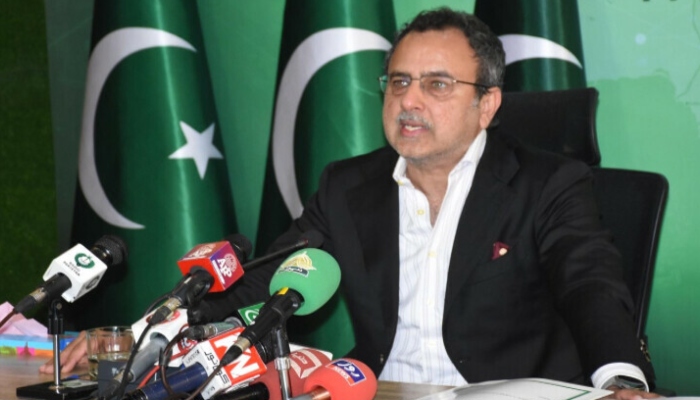
Federal Energy Minister Owais Leghari has said that the International Monetary Fund (IMF) is currently not allowing Pakistan to provide cheaper electricity during specific hours. He stated that discussions with the global lender have been ongoing for several months to gain approval for this electricity flexibility initiative.
The remarks were made during a conference on Battery Storage Flexibility 2026 held in Islamabad, where the energy minister responded to questions from experts and industry representatives. He highlighted the importance of modern energy solutions and reforms aimed at improving Pakistan’s power sector.
Owais Leghari said that allowing flexible electricity pricing at certain times could help increase power consumption and improve the efficiency of the national grid. He referred to international examples, stating that an Australian company significantly increased electricity sales by using similar mechanisms. He added that Pakistan would continue discussions with the IMF to secure approval for this facility.
The federal minister emphasized that major energy reforms are underway in Pakistan and assured that all relevant facts would be presented before the IMF. He expressed confidence that the lender would be convinced about the benefits of these measures. According to him, Pakistan’s first comprehensive energy plan is expected to be introduced in April next year.
Leghari also said that in the future, consumers would be able to store solar energy during the day and use it at night. He noted that the availability of solar power during daytime hours has already contributed to improving the electricity situation in the country.
The energy minister revealed that the share of clean energy in Pakistan’s electricity generation has reached 55 percent. He said the government aims to increase the clean energy share to 90 percent by 2035. However, he stressed that achieving this target would not be possible through solar and wind energy alone without large-scale battery storage solutions.
According to Owais Leghari, battery storage will play a crucial role in turning electricity into a national asset and maintaining balance in the power grid. He said the government is focusing on developing a local battery energy storage industry instead of relying only on imports.