
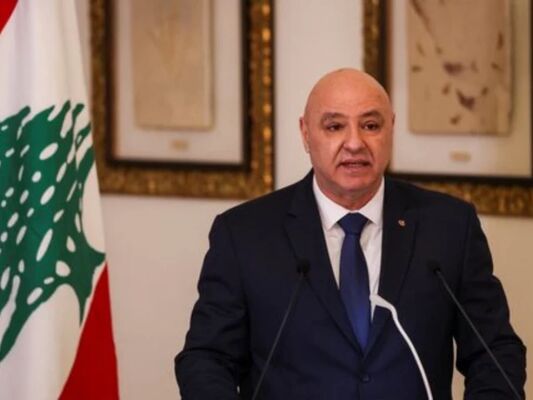
Lebanese President Joseph Aoun held talks with Army Commander Rodolphe Haykal to review the military’s upcoming responsibilities following the Lebanon-Israel framework agreement brokered by the United States. The meeting focused on security developments, the army’s future role, and efforts to strengthen state authority after the latest diplomatic breakthrough aimed at ending the conflict.
According to a statement from the Lebanese presidency, Haykal briefed the president on the outcomes of his recent visits to Türkiye and the United Kingdom, where discussions centered on military cooperation and defense relations. The leaders also reviewed the country’s security situation and preparations for implementing the new framework agreement.
The Lebanon-Israel framework agreement, signed on Friday, outlines a phased Israeli withdrawal from occupied Lebanese territory. The withdrawal is expected to begin in two pilot areas, although their locations have not been publicly disclosed. The agreement does not specify a fixed timeline, instead linking Israeli withdrawal to the Lebanese army assuming full security responsibilities in evacuated regions.
The framework also calls for the disarmament of armed groups, particularly Hezbollah, as part of the broader security arrangement. Lebanese officials have described the agreement as an important first step toward restoring full state sovereignty, while Hezbollah has strongly rejected the deal, calling it unacceptable and arguing that disarmament cannot be tied to Israeli withdrawal.
During the meeting, President Aoun praised the Lebanese army’s leadership, officers, and personnel for their efforts to maintain national security, protect borders, and preserve civil peace. He stressed that the armed forces remain committed to implementing decisions made by the country’s political leadership under the Lebanon-Israel framework agreement.
Aoun also dismissed criticism directed at the military institution, saying campaigns aimed at undermining the army would not affect its professionalism or public trust. He reaffirmed his confidence in the armed forces, emphasizing their central role in safeguarding Lebanon during a sensitive political and security transition.
The security situation in Lebanon remains fragile despite the agreement. According to Lebanese health authorities, thousands have been killed and injured since the conflict intensified, while more than one million people have been displaced. Israel continues to maintain a military presence in parts of southern Lebanon, making the implementation of the Lebanon-Israel framework agreement a key test for regional stability.