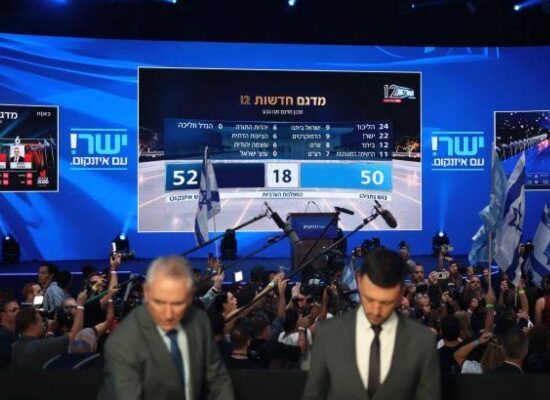

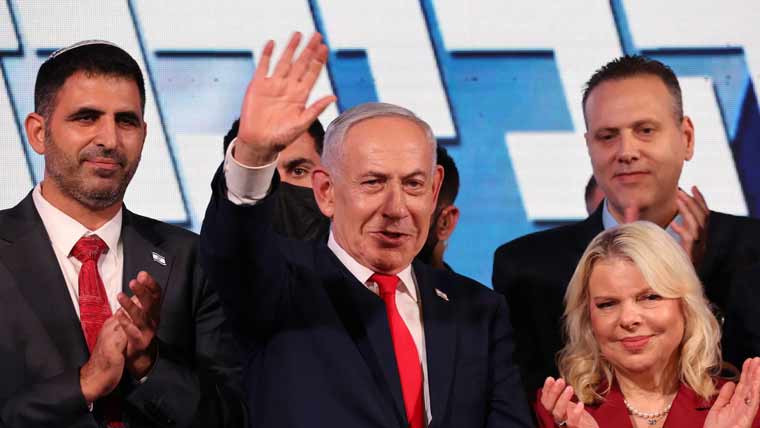
Early Israel election results show Prime Minister Benjamin Netanyahu’s alliance leading the race, but it remains short of the parliamentary majority needed to form a government. According to Israeli media reports, vote counting is still underway, with more than 2.7 million ballots counted so far. This represents approximately 57% of the total votes, leaving the final political outcome uncertain.
The preliminary figures indicate that Netanyahu’s alliance is leading in 56 parliamentary seats. Meanwhile, the opposition alliance led by Eisenkot is ahead in 49 seats. These figures reflect the ongoing count and may change as election officials process the remaining ballots. The Israel election results have therefore not yet established which political bloc can secure a governing majority.
According to the reported figures, Netanyahu’s own party is leading in 28 seats separately from the wider alliance. On the opposition side, the Yashar party is ahead in 21 seats. Israeli Arab parties are also leading in 15 seats, making their representation an important part of the emerging parliamentary picture.
Israel’s parliament, known as the Knesset, has 120 seats. A political bloc needs at least 61 seats to secure a majority and form a government. However, the early figures show that neither Netanyahu’s alliance nor the Eisenkot-led opposition alliance has reached that threshold. The distribution of the remaining seats could therefore influence negotiations over the next government.
The election outcome is particularly important because the leading alliance cannot rely on its current seat position alone to guarantee a parliamentary majority. Political parties may need to negotiate with other groups to secure sufficient support. Any coalition-building effort will depend on the final distribution of seats and the willingness of parties to cooperate.
The continuing vote count means that the reported figures should be treated as preliminary rather than final results. Changes in the number of seats held by individual parties or alliances remain possible as more ballots are counted. Israeli media reports have presented the current standings as an early indication of the political balance, not a confirmed final outcome.
The Israel election results will become clearer once the counting process concludes and the final seat allocation is announced. Until then, Netanyahu’s alliance remains ahead in the preliminary figures but below the 61-seat threshold. The opposition alliance also remains short of a majority, leaving the formation of the next Israeli government uncertain.