
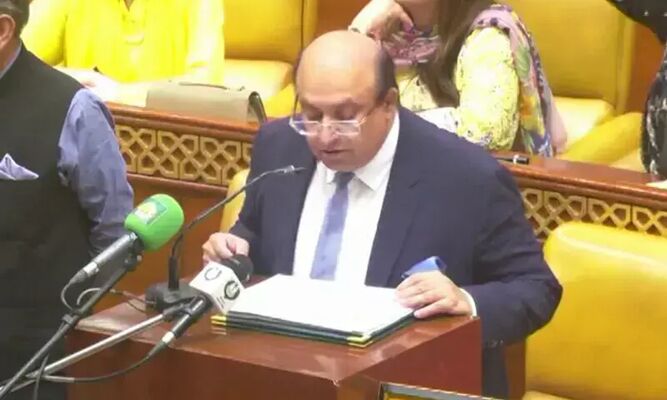
The Punjab Budget 2026-27 debate concluded in the provincial assembly with Finance Minister Mujtaba Shujaur Rehman strongly defending the government’s fiscal performance and criticizing the opposition for what he described as a lack of preparation and understanding of budget allocations.
While winding up the budget debate, the minister said the opposition had spent several days discussing the financial plan without fully understanding the details of the proposed development projects. He argued that criticism of the budget should be based on facts and accurate figures rather than political rhetoric.
Highlighting the government’s performance during the outgoing fiscal year, Rehman stated that Punjab had utilized 93 percent of its development budget and achieved 99 percent of its revenue target. According to him, these figures reflect effective financial management and improved governance across the province.
Discussing development priorities under the Punjab Budget 2026-27, the minister announced an allocation of Rs556 billion for 387 development schemes in South Punjab. In addition, Rs38 billion has been earmarked for development projects in the Katcha riverine areas to improve infrastructure and living conditions.
The government has also allocated significant resources for welfare initiatives. Rehman said Rs29 billion has been reserved for the Health Card programme, Rs12.5 billion for the Kisan Card scheme, and Rs5 billion for the Dhee Rani Programme. He clarified that the Health Card initiative remains active and has only been redesigned to improve efficiency.
Responding to allegations of corruption, the minister rejected the claims and cited international assessments that, according to him, show improvements in Pakistan’s standing on corruption-related indicators over the past two years. He also argued that political stability is essential for long-term economic growth.
The Punjab Budget 2026-27 debate also touched on broader political issues. Rehman referred to the events of May 9 and maintained that political reconciliation would require accountability and acknowledgment of past actions. The budget session ended with the government reaffirming its commitment to development spending, welfare programmes, and fiscal discipline.