
France has deployed water-bombing aircraft and hundreds of firefighters to battle the France Fontainebleau wildfire, which has burned through large areas of forest south of Paris. The blaze, intensified by a severe heatwave, forced the closure of a major motorway and disrupted rail services as emergency crews worked to prevent the fire from spreading further.
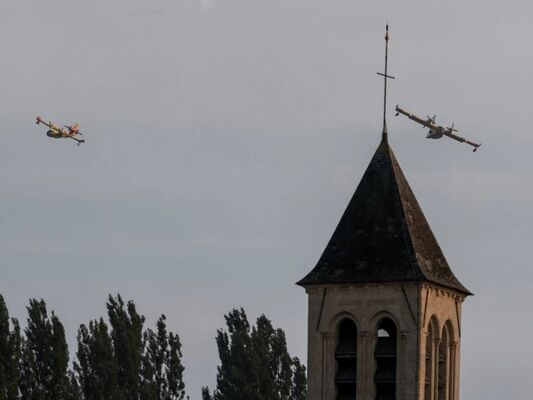
More than 400 firefighters spent the night battling the flames in the historic Fontainebleau forest, located about 70 kilometres south of the French capital. Authorities also deployed two Canadair CL-415 water-bombing aircraft to support ground operations after the fire scorched more than 800 hectares of woodland.
The wildfire broke out near the A6 motorway, one of France’s main transport routes connecting Paris with Lyon and southern regions. Authorities temporarily closed sections of the highway because of the advancing flames, while several smaller fires in the surrounding area disrupted high-speed train services.
Emergency officials warned residents that the firefighting aircraft would collect water from the River Seine to combat the blaze. Fire crews continued containment efforts throughout Monday as high temperatures, dry vegetation and strong winds created difficult conditions for firefighters.
The France Fontainebleau wildfire comes as Western Europe experiences its third prolonged heatwave of the summer. Scientists have warned that increasingly frequent and intense heatwaves are raising the risk of large-scale wildfires across the continent, with dry landscapes allowing flames to spread rapidly.
In recent weeks, major wildfires have affected France, Spain, Portugal and Greece, destroying thousands of hectares of land. In Spain, the death toll from a wildfire in Almeria province rose to 13 after a 93-year-old British woman died from severe burns sustained during the blaze.
European health authorities have also linked the prolonged heat to a sharp rise in excess deaths. Alongside wildfire damage, extreme temperatures have disrupted electricity supplies, forced school closures and broken weather records in several countries. Officials say emergency preparedness and climate resilience remain increasingly important as Europe faces more frequent extreme weather events.