
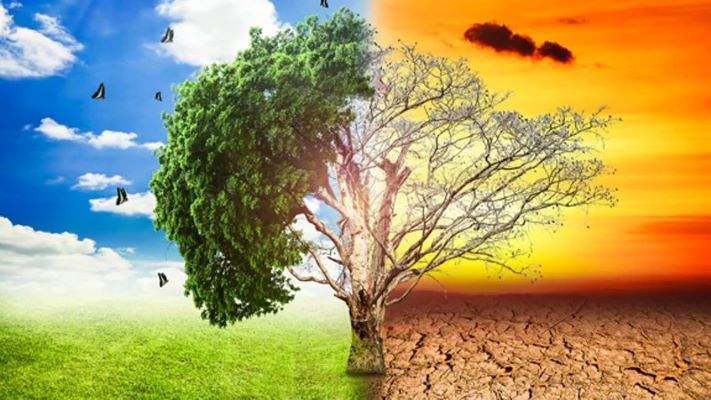
Pakistan has called for stronger international cooperation to address the growing threats posed by climate change, including melting glaciers, rising sea levels, and extreme weather events. Federal Minister for Climate Change Dr. Musadik Malik highlighted these concerns while addressing the Arctic Circle Assembly in Iceland, emphasizing the need for a coordinated global response.
Speaking at the international gathering, Dr. Musadik Malik noted that Pakistan is among the countries facing serious climate-related challenges. The increasing impact of environmental changes has made climate resilience, scientific research, and international collaboration essential for protecting vulnerable communities and ecosystems.
The minister stressed that climate change is not limited to a single region and requires countries to work together. He pointed out that melting glaciers and changing environmental conditions pose risks to water resources, livelihoods, and long-term environmental stability, particularly in regions dependent on glacier-fed rivers.
Dr. Malik also highlighted the importance of building stronger connections between the Arctic and Himalayan regions. According to him, cooperation between scientists and researchers working in these areas could improve understanding of glacier melting and help countries develop more effective strategies to address its consequences.
The Arctic and Himalayan regions may be geographically distant, but both offer valuable insights into the effects of a warming planet. Sharing scientific knowledge, research findings, and environmental data can help experts identify emerging risks and support evidence-based climate policies.
The minister further emphasized the need to strengthen communication between scientists and policymakers. He indicated that scientific research can have a greater impact when its findings are translated into practical policies, effective planning, and timely action to reduce climate-related risks.