
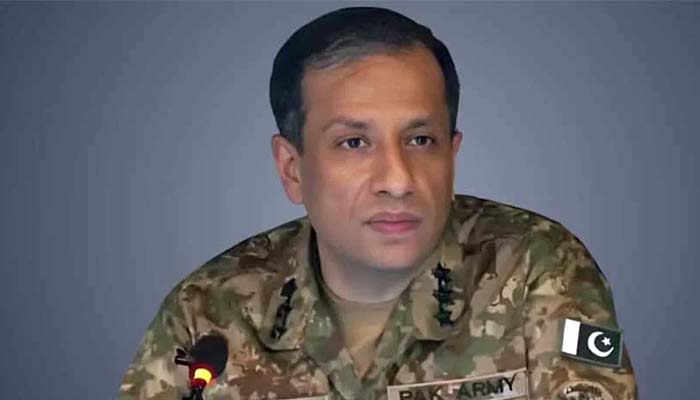
Makkah Alliance collective deterrence could come into effect if negotiations over the Middle East conflict fail and military confrontation occurs, Pakistan’s military spokesperson has said. Inter-Services Public Relations Director General Lieutenant General Ahmed Sharif Chaudhry stressed that reaching a negotiated settlement remains essential to preventing further escalation.
In an interview with an Arab television channel, the ISPR chief said the Makkah joint defence agreement had progressed significantly within a short period. He described the agreement as the result of a shared vision among three countries. His remarks highlighted the importance of coordination among regional partners amid growing tensions.
Chaudhry said protecting Saudi Arabia’s sovereignty, territorial integrity and the two holy mosques remained Pakistan’s highest priority. He stressed that Pakistan would not compromise on the protection of Islam’s holiest sites. He added that the country’s position had already been communicated through its political leadership and Field Marshal.
The military spokesperson also said attacks on holy sites had caused strong anger among the public and political and military leadership. He warned that escalating regional disputes at any level would benefit no country. He called for restraint and emphasised the need to prevent the conflict from spreading further across the Middle East.
Regarding the possibility of military confrontation, Chaudhry said Makkah Alliance collective deterrence could be activated if diplomatic efforts failed to produce a settlement. However, he clarified that the alliance’s leadership and strategy were clearly defined and that it had no aggressive intentions. His comments underlined the stated preference for negotiations over military escalation.
He further said Pakistan, Saudi Arabia and Türkiye shared a commitment to regional peace, stability and prosperity. According to the ISPR chief, the alliance was not directed against any particular country. Instead, its stated purpose was to strengthen regional security and encourage cooperation among Muslim countries.
Chaudhry concluded by stressing that Muslim countries needed unity rather than confrontation with one another. His remarks came amid concerns about the widening Middle East conflict and the risks of further military escalation. Pakistan’s position, as outlined in the interview, emphasised diplomatic engagement while maintaining a collective defence framework for regional security.