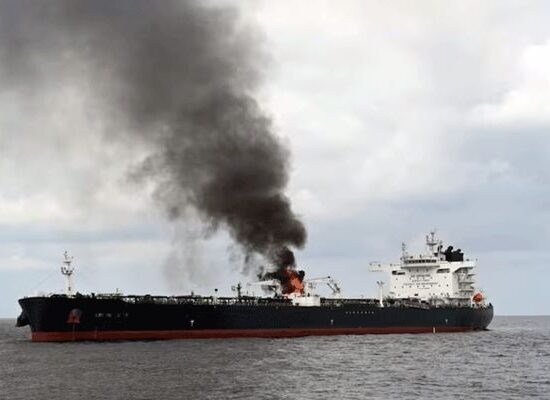

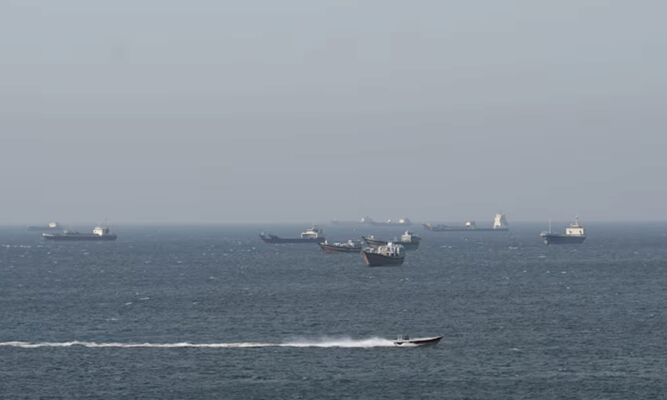
Strait of Hormuz tanker attacks have intensified concerns over global energy security after at least four oil and gas tankers reversed course following fresh attacks on commercial vessels. Ship-tracking data showed that the vessels abandoned plans to transit the strategic waterway as security risks continued to rise.
The latest disruption followed reports that a Qatari liquefied natural gas (LNG) tanker and a Saudi-flagged crude oil tanker were damaged near the Strait of Hormuz. The incidents came after reports of missile attacks targeting vessels in the area, prompting maritime authorities to raise the security threat level for commercial shipping to “severe.”
According to maritime tracking data from Kpler and LSEG, three QatarEnergy-controlled LNG tankers — Al Ghariya, Duhail, and Al Ruwais — changed course while heading toward Qatar’s Ras Laffan export terminal. The vessels were sailing without cargo and were expected to load LNG before reversing their routes.
An Indian-flagged oil tanker carrying two million barrels of Kuwaiti crude oil also turned back near the Strait of Hormuz after reaching the coast of Oman. The vessel had loaded its cargo late last week and was preparing to transit one of the world’s busiest energy shipping routes.
Shipping analysts reported that more than 10 empty vessels are now waiting near Ras Laffan to load cargoes, reflecting growing caution among shipping companies. Industry data also indicated that over 50 QatarEnergy- and ADNOC-operated vessels remain positioned across the Gulf, the Arabian Sea and nearby shipping lanes, with some temporarily disabling tracking systems for security reasons.
Despite the heightened risks, several large crude carriers successfully passed through the strait. Some vessels carrying crude oil from Qatar and Saudi Arabia continued their voyages, demonstrating that commercial traffic has not completely stopped despite the deteriorating security situation.
The Strait of Hormuz remains one of the world’s most critical maritime chokepoints for oil and gas exports. Analysts warn that any prolonged disruption could affect global energy supplies, increase freight costs and push international oil prices higher if security conditions continue to worsen.