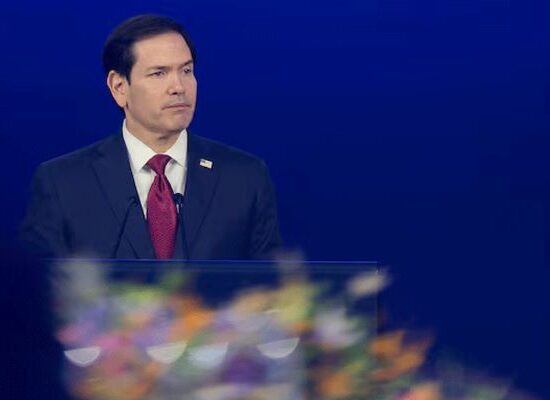

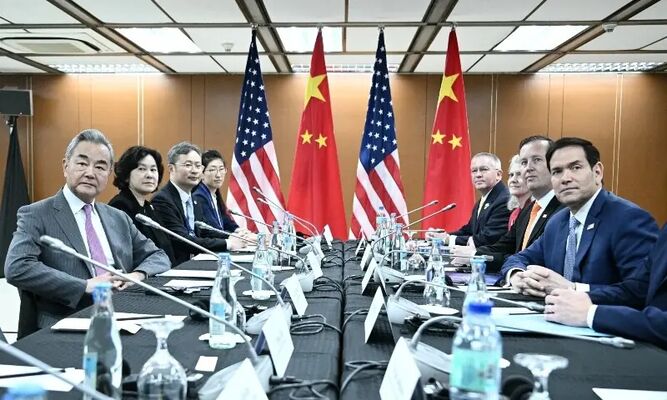
US Secretary of State Marco Rubio and Chinese Foreign Minister Wang Yi held Rubio Wang Yi talks on the sidelines of the ASEAN Foreign Ministers’ Meeting in Manila on Wednesday, as regional leaders discussed growing tensions in the Middle East, the South China Sea and broader Indo-Pacific security.
The high-level meeting came ahead of the 33rd ASEAN Regional Forum and is expected to contribute to preparations for a possible summit between US President Donald Trump and Chinese President Xi Jinping later this year. Neither Rubio nor Wang made public remarks before the closed-door discussions.
The talks took place as the world’s two largest economies continue to manage a fragile relationship marked by trade disputes, strategic competition and disagreements over regional security. Recent US allegations of Chinese interference in American elections have also added to diplomatic tensions, claims that Beijing has denied.
Addressing ASEAN foreign ministers earlier, Rubio blamed Iran for the renewed conflict in the Middle East, saying Tehran had not shown seriousness in negotiations. He warned that the United States would protect its interests and those of its allies if diplomatic efforts failed.
Rubio also stressed that Iran must not be allowed to control the Strait of Hormuz, arguing that such a development could create dangerous precedents for global shipping and regional stability, including in Southeast Asia.
The South China Sea remained another major focus of the regional gathering. In a commentary published before his arrival in Manila, Rubio warned against the use of commerce as a geopolitical tool and said freedom of navigation was vital for the sovereignty, security and economic future of ASEAN member states.
Meanwhile, Wang Yi called for greater mutual trust, openness and cooperation between China and ASEAN countries, describing the partnership as an anchor for regional peace and development. The meeting also included ministers from India, Japan, Australia, Russia, Britain, Canada, South Korea and the European Union, while the Quad countries reaffirmed support for a free and open Indo-Pacific.