
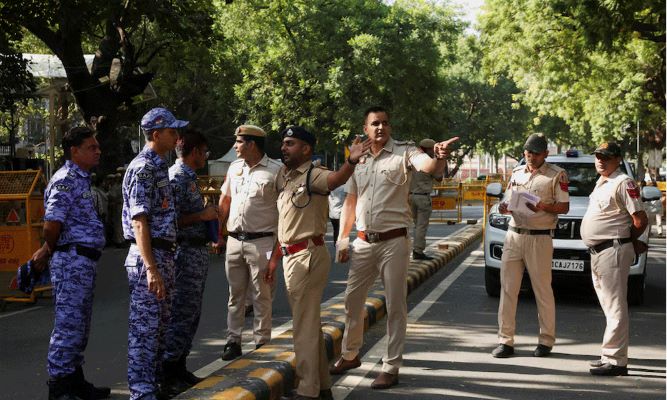
Indian police detained several opposition lawmakers in New Delhi on Tuesday during a protest demanding the resignation of Chief Election Commissioner Gyanesh Kumar. The India election protest followed concerns raised over changes to voter lists and registration procedures.
Opposition parties and members of a youth movement marched from Parliament toward the Election Commission headquarters. The demonstration covered roughly one kilometre through central Delhi before police stopped protesters near the commission’s offices.
Lawmakers carried placards and national flags while raising slogans against Kumar. Some protesters accused the election chief of acting against democratic interests and alleged that changes to voter lists could affect voters’ rights. The Election Commission and the ruling Bharatiya Janata Party have rejected the accusations.
Congress President Mallikarjun Kharge said the opposition was protesting to protect democratic institutions. Opposition leaders have demanded greater transparency over the voter registration process and questioned the neutrality of the election body under Kumar’s leadership.
Opposition leader Rahul Gandhi, his sister Priyanka Gandhi and other lawmakers joined the demonstration. Security personnel used barricades to prevent protesters from entering the Election Commission premises. Indian media reported that the Gandhi siblings were among those briefly detained before being released.
The ruling BJP accused Congress leaders of attempting to create disorder and attack state institutions. BJP spokesperson Sambit Patra said the opposition had repeatedly failed to achieve its political objectives and was now targeting institutions through protests. The election commission has also denied allegations of political bias.
The India election protest comes after several days of demonstrations by political parties and student groups. India’s Supreme Court has agreed to hear petitions seeking its intervention over allegations concerning the voter revision process and the conduct of the election chief, adding a legal dimension to the ongoing political dispute.