
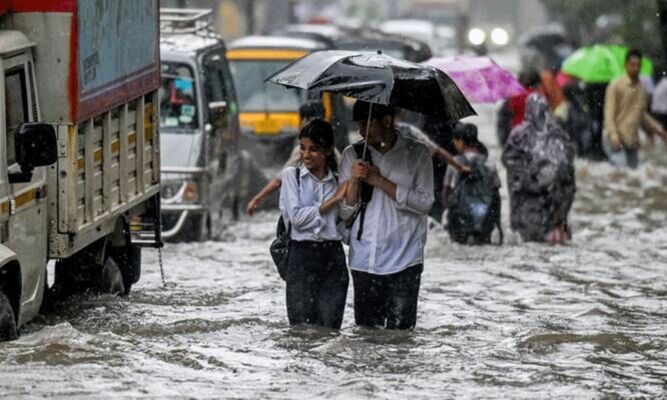
The Mumbai heavy rains turned deadly on Sunday after at least six people, including five children, were killed when multiple buildings collapsed in the city’s eastern suburbs. Torrential monsoon rains also caused flooding, landslides and major disruptions to road, rail and air travel across India’s financial capital.
According to civic authorities, two to three multi-storey houses collapsed in the Mankhurd slum area following continuous rainfall. The victims included five young children and one woman, while rescue teams rushed to the site to search for survivors and clear the debris.
Heavy rainfall also triggered landslides along the Mumbai-Pune Expressway, forcing authorities to temporarily close the key highway. The closure disrupted traffic between the two cities as emergency crews worked to remove debris and restore safe travel conditions.
The severe weather affected multiple modes of transport. Several flights experienced delays, while long-distance train services, including routes connecting Mumbai and Pune, were cancelled. Waterlogged roads further slowed traffic, creating difficulties for commuters across the city.
Authorities also ordered the closure of schools and colleges on Monday as heavy rain continued. Local television footage showed residents walking through flooded streets, while emergency teams remained on alert in low-lying areas vulnerable to further flooding.
Local media reported that heavy monsoon rains have caused several trees to collapse across Mumbai since late June, resulting in at least three additional fatalities. Weather officials said some parts of the city recorded more than 161 millimetres of rainfall within a short period.
The Mumbai heavy rains highlight the challenges posed by India’s monsoon season, particularly in densely populated urban centres. Authorities have urged residents to avoid unnecessary travel, remain cautious in flood-prone areas and follow official weather advisories until conditions improve.