
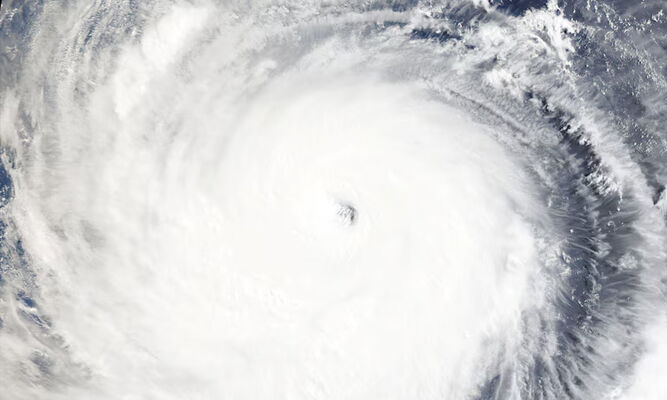
Typhoon Bavi has placed China and Taiwan on high alert as the powerful storm moves across the Pacific with winds approaching 200 km/h. Meteorologists warn it could become one of the largest and most destructive tropical cyclones to threaten the region in decades, prompting emergency preparations across East Asia.
Forecasters say the storm spans nearly 1,000 kilometres, making it one of the biggest weather systems in recent years. It is expected to pass north of Taiwan before making landfall in China’s eastern Fujian Province by Saturday evening, bringing destructive winds, torrential rain and dangerous coastal conditions.
Taiwanese authorities have placed approximately 29,000 soldiers on standby to support rescue and disaster relief operations. Northern mountain regions, including areas near Taipei, could receive up to one metre of rainfall, raising the risk of flash floods and landslides.
Weather officials described Typhoon Bavi as the largest storm by physical size expected to affect Taiwan since 1987. Fishing boats have returned to safe harbours, residents are collecting sandbags, and farmers are rushing to harvest crops before severe weather arrives.
The approaching typhoon comes as China continues to recover from the devastation caused by Typhoon Maysak. Authorities reported dozens of fatalities, widespread flooding, agricultural losses and extensive damage to infrastructure in affected regions, increasing concerns about the impact of another major storm.
The threat has also disrupted transportation across the region. Airlines in Japan’s Okinawa Prefecture have cancelled dozens of domestic and international flights due to expected strong winds and dangerous sea conditions, affecting thousands of passengers.
Experts say Typhoon Bavi could remain highly dangerous even if wind speeds weaken before landfall because of the enormous amount of moisture it carries. Scientists also warn that warmer ocean temperatures linked to El Niño may contribute to increasingly powerful tropical storms across the Asia-Pacific region.