

The US strikes Iran IRGC targets operation marked another major escalation in the Middle East conflict after Tehran launched ballistic missiles at American forces stationed in Jordan. According to the US military, dozens of Islamic Revolutionary Guard Corps (IRGC) facilities, including command centres and drone infrastructure, were targeted during a two-hour military operation early Thursday. Iran’s state media reported that three people were killed on Qeshm Island.
US Central Command (CENTCOM) said the operation began at midnight GMT and concluded two hours later. The military stated that the strikes were designed to reduce threats posed by Iran and its allied groups against US personnel, commercial shipping, and Gulf nations. Officials also confirmed that Iranian missiles fired toward US positions in Jordan were successfully intercepted.
Regional tensions continued to expand as Jordan’s armed forces announced they had intercepted five Iranian missiles aimed at the kingdom. Earlier, US and Saudi forces also carried out coordinated strikes against Iran-backed groups in eastern Iraq, describing the action as retaliation for drone attacks targeting Saudi oil infrastructure.
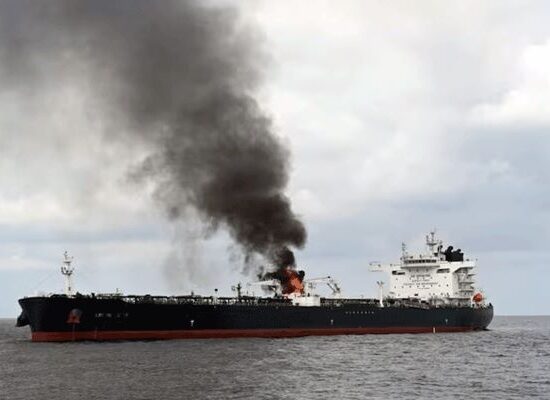
The conflict also affected Egypt after a fire broke out aboard a US-owned gas storage tanker at the Mediterranean port of Damietta. While a maritime security company suggested a drone strike may have been responsible, Egyptian authorities only confirmed the fire and did not identify the cause or assign responsibility.
The US strikes Iran IRGC targets campaign comes as fighting around the Strait of Hormuz continues to threaten global energy markets. Iran has claimed control over the strategic waterway and rejected a Gulf-backed proposal presented through Oman for jointly managing shipping access. The disagreement has increased concerns over maritime security.
Oil markets reacted sharply to the latest developments. Brent crude prices climbed above $90 per barrel before easing slightly the following day. Analysts said uncertainty surrounding Gulf oil supplies and shipping routes continues to influence global energy prices as diplomatic efforts struggle to gain momentum.
The latest military actions highlight the growing complexity of the regional conflict, with Iraq, Jordan, Egypt, Saudi Arabia, and Iran increasingly drawn into the crisis. While Washington says it remains open to a diplomatic solution, continued military exchanges suggest that tensions may remain high unless meaningful negotiations resume.