
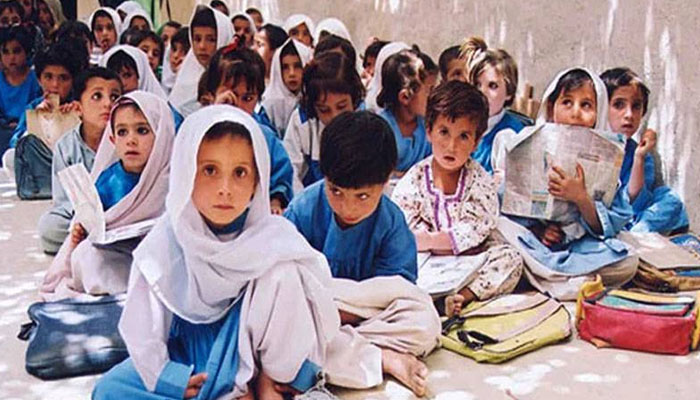
PESHAWAR: The Khyber Pakhtunkhwa government has started work on a comprehensive plan to bring out-of-school children in Khyber Pakhtunkhwa into the formal education system. Officials from the education, local government, health and social welfare departments signed a memorandum of understanding as part of the initiative, with Chief Minister Muhammad Sohail Afridi also present at the ceremony.
According to a briefing, a comprehensive survey will be conducted to identify children who are currently out of school across the province. A “One Map” system will also be developed to determine the number and locations of out-of-school children, helping authorities improve education planning and allocate resources more effectively.
Officials said the 2023 census identified around 4.9 million children as being out of school in Khyber Pakhtunkhwa, while provincial education department figures put the number at approximately 2.6 million. Under the first phase of the initiative, the government has set a target of immediately enrolling 60% of out-of-school children.
The authorities will also collect data on children under the age of five to support future education planning. Government schools, community schools, double-shift arrangements and digital learning platforms will be used to expand educational opportunities for children who are currently outside the school system.
The briefing said children who leave school because of poverty will receive support through scholarships, Zakat and other assistance programmes. The financial support is intended to reduce economic barriers that prevent families from sending their children to school or force students to drop out.
Scholarship payments will reportedly be linked to a minimum 75% attendance requirement. In addition to formal education, children will receive technical and vocational training under the United Nations-backed Generation Unlimited programme, giving them opportunities to develop practical skills alongside their education.
To improve transparency and ensure the accuracy of the survey, an independent organisation will verify 5% of the collected survey data. The initiative aims to use reliable data, financial assistance, flexible education options and skills training to gradually bring out-of-school children in Khyber Pakhtunkhwa into education and improve their long-term opportunities.